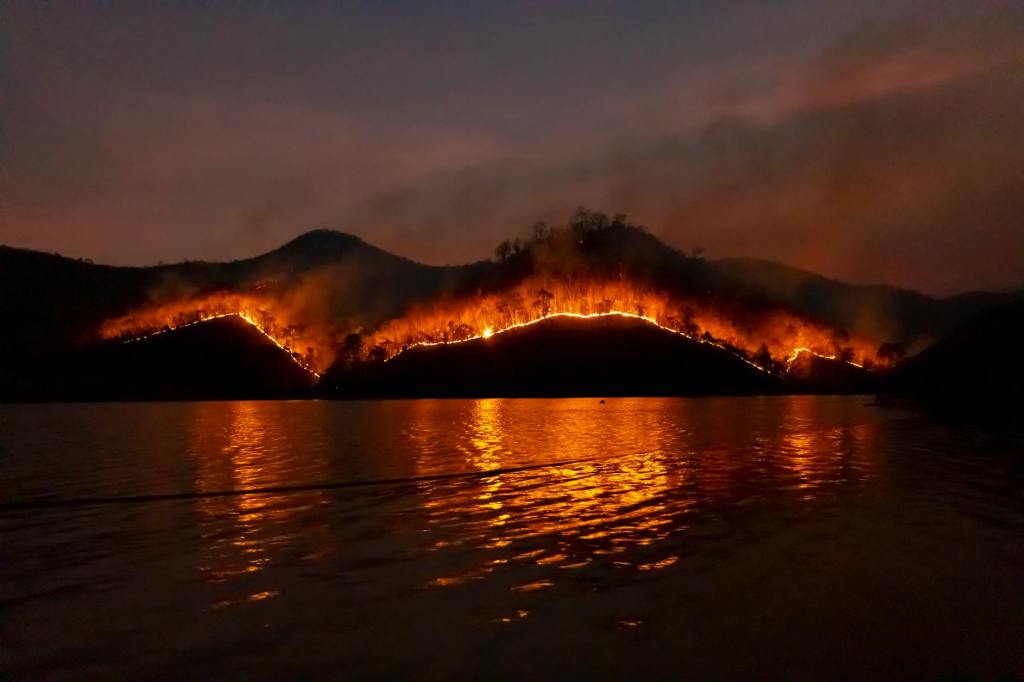
I wrote this compare/contrast essay last year for one of my online schools. To my surprise, I sort of enjoyed the process, and it turned out quite interesting. I know what you’re thinking: Essay!? Interesting!? Those two words don’t go together! Well, since this assignment let me choose a topic of my own, I let the fantasy author in me do the writing and chose the creative path.
Today, I’ll be discussing the dual natures of fire and water in my compare/contrast essay. While these seemingly ‘yin and yang’ elements can be the undoing of one another, they do have some undeniable similarities. In my compare and contrast essay, I will explicitly discuss the correspondence between fire and water and provide a three-dimensional view of their characteristics.
As we all know, fire is associated with mass destruction and chaos and often exhibits this quality when untamed. For this reason, humans have developed a natural fear of this element. However, like fire, water is also acknowledged as a significant source of peril for civilization—flash floods, tsunamis, and the main contributor to mold growth, just to name a few.
Another similarity between fire and water is their capacity to assist in medical and survival issues. Both fire and water are noteworthy for purification purposes. Water can clean out wounds and is necessary for living a hygienic life. In a similar manner, fire is capable of purifying instruments used for self-surgeries and other emergency extractions. This purification factor also appears in spiritual settings: religions like Christianity see fire as an element that burns impurities off the soul. In likeness, the Bible also denotes water as the element which washes away sin.
We also must not forget that fire and water are among the most influential contributors to new life in nature: while water nourishes plants and the wilderness, forest fires are the genesis of healthier, more beautiful plant life. Turning to a more spiritual perspective again, the Bible uses the metaphor of life after destruction when it claims that God will make ‘beauty from ashes’ in a manner highly similar to forest fires. In comparison, Jesus uses water in the Bible as a metaphor for eternal life. He says that it nourishes our souls and satisfies us completely. Whether in a spiritual or physical context, fire and water can be associated with life.
In spite of all these similarities, it would be improper to neglect the stark contrasts between the elements of fire and water. For starters, water is a continuum; we cannot create more, but fire can only exist on behalf of an action. An example of this would be that humans are made of water, whereas fire is made by us. A quick strike of flintstone could conjure the element of fire, but water is eternal. It can neither be killed nor be born.
A second aspect that differentiates fire and water is their ability to spread. While a mere spark of fire can blossom into a bonfire, water holds no such ability unless merged with a stream or puddle.
The most remarkable contrast—and undoubtedly the most well-known too—is fire and water’s tendency to eradicate each other. Water extinguishes fire, while fire changes water’s form from a liquid to a gas. In light of this, another discrepancy becomes apparent: fire can chemically affect water, in other words, causing it to become gaseous, but not vice versa. Water will invariably be the downfall of fire.
A final contrast between fire and water is their association with people. Water is portrayed as a pure and calm element in art, books, movies, and a myriad of other media branches. It isn’t aggressive or ill-tempered, and we see that depicted in paintings containing water settings. The cool, blue colors emanate a peaceful aura. This is a dramatic distinction from the social view of fire, which states that it is a wild and uncontrolled power. Most media depictions of fire are rigged to emanate excitement, aggression, or anger.
In conclusion, there will always be differences and similarities in this world. It is all part of the complex nature of things. Furthermore, I hope my essay demonstrates the capacity to look at everything from all angles and consider every pro and con in spite of the implications. Sometimes, we only tend to look at one side of the story, in other words, the difference between two current subjects (water may be relieving in the summer, but we shouldn’t overlook fire’s role in the winter.) Everything changes when we take a big step back and analyze things from a three-dimensional perspective, where all aspects of a matter are displayed without bias. We can only wholly deduct an opinion and form a conclusion after considering every possible factor.

 Michael T. Hare
Leave a reply to ambitious7e042f55be Cancel reply